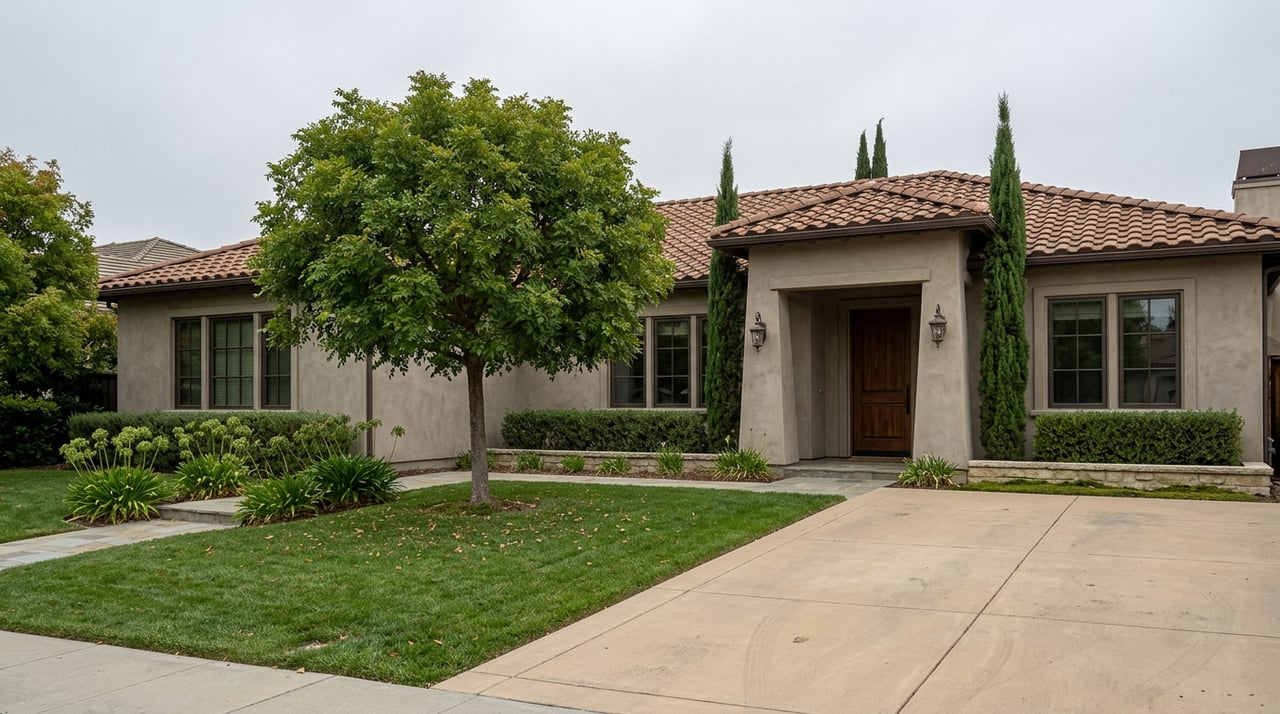
Why Dublin's Newest Homes Are Pricing Below Its Oldest Ones
September 24, 2026
September 24, 2026
Two numbers stand out for buyers comparing Dublin homes right now. Over the three months ending June 2026, the older neighborhoods west of San Ramon Road sold for a median of $638 per square foot. The newer, master-planned tracts east of Tassajara Road, including communities with pools, sold for $606. West Dublin homes also moved off the market in about 14 days on average. East Dublin homes took roughly 32.
That's backward from what most relocating buyers expect walking into the Tri-Valley. Newer construction is supposed to command the premium and move the fastest. In Dublin this year, it's doing neither.
The gap may reflect more than a small sample or a temporary dip. One factor buyers can compare alongside square footage, lot size, and school assignment is the recurring cost of special taxes.
Dublin's east side, Dublin Ranch, Positano, Jordan Ranch, and the newer phases around Fallon Village and Tassajara Hills, was largely built after 2000 through Community Facilities Districts, commonly called CFDs or Mello-Roos taxes. The city itself explains the mechanics plainly on its own FAQ page: after Proposition 13 capped property tax growth in 1978, cities lost the ability to fund new roads, parks, and sewer lines through ordinary tax increases. The 1982 Mello-Roos Community Facilities Act gave them a workaround. Voters or landowners in a new development approve a special tax, the city issues bonds against it, and a facilities-based CFD tax rides on top of the standard property tax bill while its bonds are outstanding, typically 20 to 30 years; a services-based CFD tax can continue for as long as the service is provided.
Dublin has used this tool extensively on the east side.
West Dublin largely predates this financing tool. Most of the housing stock there went up in the 1960s through the 1990s, before Dublin Ranch, Positano, or Schaefer Ranch existed as addresses. Those older streets were built and paid for the old way, through ordinary property tax revenue.
That's another cost to consider alongside the citywide median. A buyer scanning listings by price per square foot sees East Dublin looking like the value play: newer kitchens, larger floor plans, and a lower number attached. Buyers should also account for the CFD charge shown separately on the county tax bill. HOA dues also factor into monthly costs; they run higher in East Dublin's amenity-heavy communities like Wallis Ranch than in older West Dublin streets that often have none.
Run the comparison the way an underwriter would, using the same purchase price for a home on each side of the city.
| West Dublin (older stock) | East Dublin (master-planned) | |
|---|---|---|
| Base property tax | Standard tax + minor local bonds | Standard tax + minor local bonds |
| Mello-Roos / CFD | Typically none | Varies by tract |
| HOA dues | $0–$150/month | $150–$500/month |
| Effective annual tax rate | Roughly 1.1%–1.3% of purchase price | Roughly 1.5%–1.7% of purchase price |
That effective rate range, 1.1 to 1.3 percent in non-CFD areas versus 1.5 to 1.7 percent in CFD-heavy tracts, comes from mortgage industry guidance on how these charges compound. On a $1.4 million home, the difference between those two rates works out to several thousand dollars a year; facilities-based charges generally end when their bonds are paid off, while services-based charges can continue as long as the service is provided.
East Dublin's lower price per square foot is one part of the comparison; recurring taxes and HOA dues are another. Buyers can compare purchase price and monthly carrying costs rather than price per square foot alone.
The days-on-market gap tracks the same logic. Redfin data for the three months ending June 2026 shows East Dublin homes taking close to a month to sell on average, with many still fielding multiple offers and some buyers waiving contingencies to compete. West Dublin homes, over the same window, sold in about half that time.
A buyer touring a Dublin Ranch or Positano listing has more homework to do before they can write a clean offer. They need the Mello-Roos disclosure, the HOA resale packet, and ideally the preliminary title report before they can compare that home honestly against a similarly priced option in an older neighborhood with no special tax at all. That extra step takes time, and it shows up in the calendar even in a market where East Dublin inventory is otherwise competitive.
Timing also matters when reviewing a home's full costs. Buyers frequently fall in love with a newer East Dublin floor plan, get comfortable with the listed price, write an offer, and only see the actual CFD charge once the preliminary title report lands, often after contingencies have already been removed.
If you're comparing homes across Dublin's east and west sides, a few steps take the guesswork out of the comparison before you're locked into a contract.
None of this makes East Dublin a worse buy. Many of those bonds fund the exact roads, parks, and schools that make those neighborhoods desirable in the first place, and facilities-based taxes retire once their bonds are paid off; services-based taxes can continue for as long as the service is provided. It just means the comparison between east and west has to happen at the level of total monthly cost, not price per square foot.
Does the Mello-Roos charge ever go away? For facilities-based CFDs, which fund one-time construction like roads and sewer lines, yes. The tax retires once the bonds backing it are paid off, typically 20 to 30 years from formation. Services-based CFDs, which fund ongoing costs like park maintenance, can continue for as long as the service is provided.
Can I deduct Mello-Roos on my taxes? Legal Clarity explains that generally, the portion that funded new construction is not deductible. A narrow exception exists for the share tied to ongoing maintenance or bond interest, but the burden falls on the homeowner to document that split. Anyone counting on this deduction should confirm the specifics with a tax professional before assuming it applies.
Is there a way to tell which East Dublin tracts carry the heaviest CFD load? Not from the address alone. Bond size, number of parcels in the district, and how recently the bonds were issued all affect the annual charge, which is why the parcel-specific tax bill matters more than the neighborhood name.
If you're weighing a move within Dublin or into it from elsewhere in the East Bay, comparing total costs starts with the monthly number, not the price tag on the listing. That's the kind of read that takes a little digging, and it's exactly the kind of digging worth doing before an offer goes in rather than after.
If you want a second set of eyes on a specific Dublin listing, or want help comparing what a home actually costs across neighborhoods before you write an offer, Shawn Shokoor is glad to help. Let's Connect.
This article is general information, not legal, tax or financial advice. Consult a qualified professional about your situation.
Stay up to date on the latest real estate trends.





Shawn believes buying or selling a home takes strategy, skills, and knowledge at the same time. He loves to help people! Nothing gives him greater satisfaction than seeing his clients reach their goals.

Shawn Shokoor | CA DRE# 01458772
(925) 315-9202
(408) 821-4180
[email protected]
760 Camino Ramon
Danville CA 94526
Office Hours
Monday to Sunday - 9:00 AM to 8:00 PM