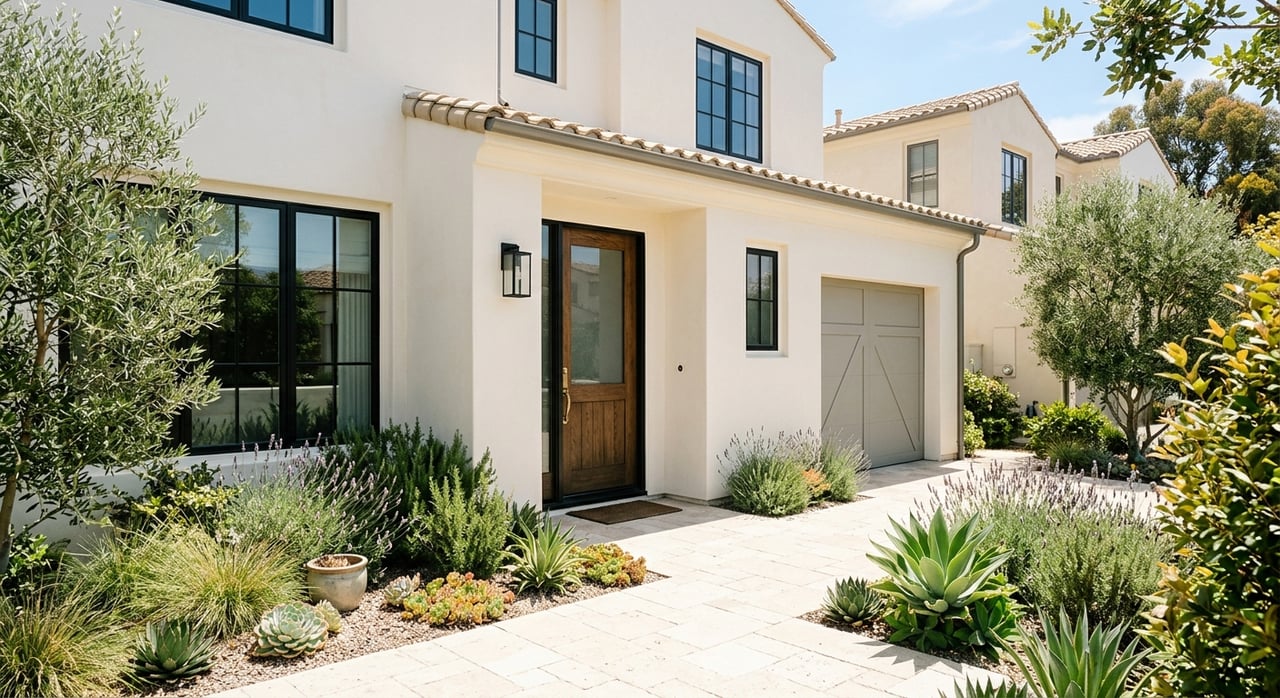
Union City First-Time Buyer Guide to Townhomes
May 28, 2026
May 28, 2026
Buying your first home in the Bay Area can feel like trying to hit a moving target, and Union City townhomes are no exception. You want enough space, a payment that fits your life, and a purchase that still feels smart in a competitive market. The good news is that attached homes can offer a more accessible entry point than detached houses in Union City, if you know what to look for. Let’s dive in.
For many first-time buyers, the biggest reason to consider a townhome in Union City is simple: price. In April 2026, Union City’s attached-home market, which combines condos and townhomes, had a median sale price of $635,000. That was far below the detached-home median of $1.4 million.
That price gap matters if you are trying to balance monthly costs with location and space. The attached market also averaged $563 per square foot, compared with $826 per square foot for detached homes. In practical terms, attached housing is often the lower-entry path into Union City.
That said, lower entry price does not mean easy or deeply discounted. The same April 2026 report showed about 3.0 months of inventory, roughly 24 days on market, and homes selling for 100% of list price on average. You still need to be prepared when the right home appears.
One of the most important things first-time buyers miss is that townhome is often a style, not a legal ownership type. In California, a townhouse-style home can be structured as a condominium or as a planned development. The legal structure comes from the recorded documents, not the way the home looks from the street.
This matters because ownership affects financing, HOA rules, and what parts of the property you actually own. A private-looking patio, driveway, or parking space may not be deeded to you as separate land. It may be exclusive-use common area instead.
That is why you should not rely on the marketing label alone. If you are comparing two similar homes in Union City, the better value may come down to legal structure, HOA health, and monthly cost, not just square footage or curb appeal.
Union City’s attached-home options cover a fairly wide range of layouts. Recent listing snapshots have included smaller 2-bedroom, 1-bath condos around 798 square feet, 2-bedroom, 2.5-bath townhomes near 1,203 square feet, 3-bedroom townhomes around 1,212 to 1,360 square feet, and newer larger homes with 3 bedrooms and 3.5 baths near 1,976 square feet.
That range gives first-time buyers meaningful choices. You may find a smaller, lower-maintenance layout that keeps your payment in check, or a larger floorplan that gives you more flexibility for work, guests, or everyday living. The key is to compare layout and ownership details together.
If you buy in a common-interest community, you typically become a member of the homeowners association automatically. That usually means monthly HOA dues and rules that govern parts of the property and community operations. For a first-time buyer, this should be part of your decision from day one, not something you think about after you are under contract.
HOA dues are usually paid separately from your mortgage payment. Depending on the community, dues can range from a few hundred dollars a month to more than $1,000. That can change what feels affordable very quickly.
You also want to understand what the HOA covers and what it does not. Some expenses may be handled at the association level, while other costs still fall on you as the owner. In the Bay Area, it is also important to remember that standard homeowners insurance does not cover earthquake or flood damage.
A lot of first-time buyers focus on price and interest rate first. Those matter, but with a Union City townhome or condo, your total monthly cost tells the real story. You want to model the full carrying cost before you start falling in love with listings.
Your monthly budget should include:
If you put less than 20% down on a conventional loan, you will usually need private mortgage insurance. FHA loans also require mortgage insurance. Those costs may be temporary in some cases, but they still affect your upfront affordability.
Another local cost to plan for is a supplemental property tax bill after closing. Alameda County states that a change in ownership triggers reassessment, and the supplemental bill is separate from the annual tax bill. The total tax bill can also exceed 1% because of voter-approved debt service and special assessments.
When you buy an attached home, your loan approval may depend on more than your own income, credit, and down payment. For some properties, especially condos, the project itself can affect financing. That is one reason the legal structure matters so much.
For FHA financing, a unit may need to be in an FHA-approved condominium project, or it must meet single-unit approval requirements where applicable. For VA buyers, the condominium project must be approved before units are eligible for VA loan guaranty. Conventional financing can also involve project review tied to insurance, reserve funding, and other project-level factors.
The takeaway is straightforward: ask your lender early whether the home is legally a condo, a planned development, or another structure that affects underwriting. If you are using FHA or VA financing, confirm project eligibility before you get too far down the road.
One of the smartest moves you can make as a first-time buyer is to review the HOA documents before you get emotionally attached. California Civil Code requires the seller of a common-interest home to provide important association records. These records can tell you a lot about the financial and practical reality of the home.
The packet can include:
This is where you may spot issues that do not show up in photos or marketing remarks. For example, you may learn about upcoming assessments, rule enforcement trends, or restrictions that affect your plans for the property. In a townhome purchase, these details are part of the asset itself.
A townhome in Union City can be strong value, but only if it fits how you want to live. The main value advantage today is entry price, not land ownership. You are usually trading some yard space, privacy, and exterior control for a lower purchase price and potentially less home maintenance.
For some buyers, that tradeoff makes perfect sense. If the payment works, the floorplan suits your daily routine, and the HOA is well-run, an attached home may be a smarter move than stretching for a detached house with a much higher price tag.
For other buyers, the premium for a detached home may still be worth it. If your long-term plans depend on more outdoor space, fewer HOA rules, or future exterior changes, those ownership differences matter just as much as the sticker price.
In Union City’s current attached market, a strong offer does not have to mean reckless terms. With about 24 days on market and homes selling at 100% of list price on average in April 2026, the market points more toward organized preparation than panic. That is good news for a first-time buyer who wants to compete without overreaching.
A stronger offer often starts with the basics done well:
This is where strategy matters. A clean, well-supported offer can stand out even when you are not trying to be the most aggressive buyer in the room.
If you want a simple way to approach your search, focus on process over emotion. That does not make the experience less exciting. It just helps you protect your budget and make a decision you will still feel good about after closing.
Here is a practical path for buying your first Union City townhome:
If your budget feels tight, Union City also points first-time buyers toward resources such as AC Boost, CalHFA, NeighborhoodLIFT, Habitat for Humanity, MCC, and homebuyer education or counseling. Alameda County’s Measure A1 homeownership page describes AC Boost as a down payment assistance program for eligible first-time buyers who live or work in Alameda County or were displaced from it.
For many first-time buyers, a Union City townhome or condo can offer the best mix of price, space, and access. The mistake is treating the HOA, project eligibility, and monthly carrying cost like side issues. They are central parts of the purchase.
When you understand the ownership structure, review the HOA documents carefully, and build your budget around the full monthly picture, you put yourself in a much stronger position. That kind of preparation helps you move with confidence and make a decision that fits both your finances and your life.
If you are thinking about buying your first townhome in Union City and want calm, strategic guidance from search to offer, connect with Shawn Shokoor.
Stay up to date on the latest real estate trends.




Shawn believes buying or selling a home takes strategy, skills, and knowledge at the same time. He loves to help people! Nothing gives him greater satisfaction than seeing his clients reach their goals.
Shawn Shokoor | CA DRE# 01458772
(925) 315-9202
(408) 821-4180
[email protected]
760 Camino Ramon
Danville CA 94526
Office Hours
Monday to Sunday - 9:00 AM to 8:00 PM